Kaantha
காந்தா
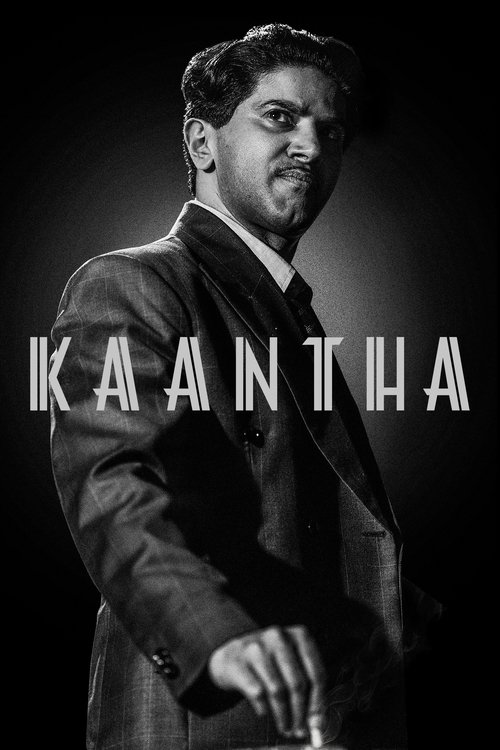
Set in the backdrop of a film set, in the 1950’s in post colonial Madras, the film is centred around the professional rivalry between a film-maker trying to make his seminal film and the top reigning actor who the director once introduced. The rivalry spirals around the leading actress, a debutante and as the relationship between the three.
Review
Step onto the set of a 1950s Madras film studio with 'Kaantha,' a gripping historical drama that masterfully blurs the lines between cinema and crime. Director Selvamani Selvaraj crafts a tense, atmospheric world where the glamour of filmmaking is undercut by the shadows of professional jealousy and ambition. The story centers on a visionary director (Samuthirakani) and the colossal star (Dulquer Salmaan) he once launched, now locked in a bitter rivalry that intensifies with the arrival of a captivating debutante actress (Bhagyashri Borse). The film is less about the movies they make and more about the dangerous, ego-driven game played behind the camera, set against the evocative backdrop of post-colonial India. The narrative unfolds like a slow-burn thriller, where dialogue and simmering glances carry as much weight as the eventual dramatic turns. The production design is impeccable, meticulously recreating the era's studios, costumes, and smoky social clubs, immersing you completely in its world. While the plot is a compelling study of power dynamics, it occasionally meanders in its second act, testing patience before its powerful convergence. The ensemble cast is uniformly strong, with Salmaan delivering a nuanced performance of charming arrogance and hidden vulnerability, and Borse making a stunning debut as the poised yet pivotal object of desire. Selvaraj's direction is confident, using the meta-narrative of filmmaking to explore themes of creation, ownership, and legacy.
Pros
- ✓Immersive Period Authenticity: The film's meticulous production design and costuming transport viewers directly to 1950s Madras, making the film set a character in itself.
- ✓Nuanced Performances: Dulquer Salmaan excels as the complex, ego-driven star, while Bhagyashri Borse holds her own with a compelling screen presence that drives the central conflict.
- ✓Atmospheric Direction: Selvamani Selvaraj masterfully builds tension through framing, lighting, and a simmering score, creating a palpable sense of impending drama.
- ✓Intelligent Meta-Commentary: The film cleverly uses the film-within-a-film structure to comment on artistry, mentorship, and the toxic side of fame and creative control.
Cons
- ✗Pacing Inconsistencies: The film's deliberate pace, especially in the mid-section, may feel sluggish to some viewers, diluting the narrative momentum.
- ✗Underdeveloped Supporting Cast: While the central trio is strong, characters played by capable actors like Rana Daggubati feel underexplored, missing opportunities to deepen the world.
- ✗Predictable Narrative Beats: Some of the twists in the rivalry, particularly concerning the actress, follow a somewhat conventional path, reducing the impact of the climax.
'Kaantha' is a compelling and beautifully crafted film that offers far more than a simple period drama. It is a sharp, atmospheric exploration of ego, artistry, and the dark side of creative ambition, dressed in the gorgeous attire of classic cinema. While its measured pace won't suit viewers seeking fast-paced action, it rewards patience with rich character studies, superb performances, and a palpable sense of time and place. The climax, when it arrives, is both dramatically satisfying and thematically resonant. This is a film for those who appreciate cinema about cinema, where the process of storytelling becomes the story itself. It stands as a significant achievement in historical filmmaking within Indian cinema and marks Selvamani Selvaraj as a director with a distinct and confident vision. Highly recommended for audiences who enjoy layered narratives, character-driven conflict, and immersive world-building.
🎯 Who Should Watch
Fans of historical dramas, character-driven thrillers, and meta-cinema; viewers interested in the golden era of Indian filmmaking; audiences who appreciate slow-burn narratives with strong atmospherics and performances.
⭐ Standout Elements
The film's standout achievement is its complete and authentic recreation of 1950s film studio culture, serving as both a lavish setting and a narrative engine. Furthermore, the central dynamic between the director and the star—a relationship poisoned by success and resentment—is portrayed with remarkable psychological depth, elevating the film beyond a mere period piece into a timeless study of power.
🎬 Overall Impact
A must-watch film that delivers on both entertainment and emotional depth.
📽️ This film represents exceptional filmmaking that deserves your attention.