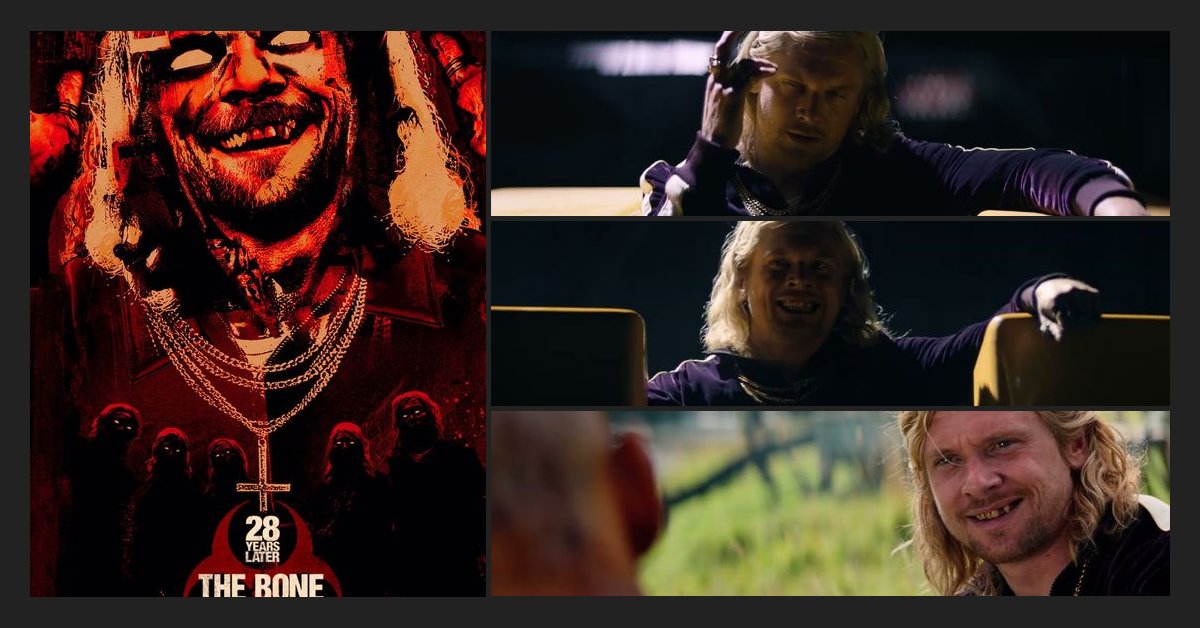

I just walked out of the theater and my hands are still a bit shaky, honestly. I need this coffee. The Bone Temple isn't just a horror movie—it's an emotional gut-punch wrapped in dread. I sat through the credits just to process it. That final shot of Ralph Fiennes... it's burned into my brain. I wasn't expecting to feel so hollow and thoughtful after a '28 Years Later' sequel. It's less about jump scares and more about this lingering, philosophical terror. I keep thinking about choices and consequences in a way I didn't anticipate.
🎬 Watch the Official Trailer
What's 28 Years Later: The Bone Temple About?
The movie picks up nearly three decades after the rage virus outbreak, but society hasn't really recovered. It follows Dr. Kelson, played by Fiennes, who gets involved in a morally complex relationship that has global stakes, while a parallel story follows Spike, whose dealings with the ruthless Jimmy Crystal spiral into pure survival horror. It's less about zombies and more about the monsters people become in a broken world.
What Works in 28 Years Later: The Bone Temple
- ✓ Ralph Fiennes delivers a masterclass in quiet desperation. His final monologue had me holding my breath.
- ✓ Nia DaCosta's direction is claustrophobic and brilliant. She uses silence better than any director working in horror right now.
- ✓ The practical effects for the 'Temple' itself are grotesque and stunning. You can almost smell the decay.
- ✓ The sound design is a character itself. The mix of eerie silence and sudden, organic crunches is perfectly unsettling.
What Doesn't Work
- ✗ The dual storyline feels unbalanced at times. I was way more invested in Fiennes' plot than Spike's.
- ✗ The middle section drags a little as it sets up the converging plots. I checked my watch once.
- ✗ Some of the science-fiction logic around the 'consequences' gets a bit muddy and is explained through clunky dialogue.
Standout Moments & Performances
There's a scene where Kelson is in a sterile white lab, and the camera just stays on his face as he realizes the full horror of what he's done. No music, just his breathing. I felt my own chest tighten. Another moment that wrecked me was a simpler one: a character trying to remember a song from the 'before times' and only getting the tune wrong. It was a devastating little portrait of lost humanity. And the first reveal of the Bone Temple—not through a wide shot, but through a character's trembling flashlight beam—was pure cinematic dread.
Main Cast: Ralph Fiennes, Alfie Williams, Jack O'Connell, Chi Lewis-Parry, Erin Kellyman
Direction, Music & Visuals
DaCosta is in complete control here. The cinematography is bleak and beautiful, using a lot of cool grays and sickly yellows. The score is minimalist, often dropping out completely to leave you in terrifying silence. Performance-wise, Fiennes is the anchor, all restrained agony. But Erin Kellyman as a weary survivor is the secret weapon—her performance is all in her eyes, which are just exhausted by the world. Jack O'Connell is also convincingly frantic as Spike. The editing in the last act, cutting between the two converging crises, is razor-sharp and anxiety-inducing.
Director: Nia DaCosta
Genres: Horror, Thriller, Science Fiction
Who Should Watch 28 Years Later: The Bone Temple?
If you like horror that gets under your skin with ideas rather than just gore, this is for you. Fans of thoughtful, atmospheric sci-fi horror like 'Annihilation' or the quieter moments of 'The Last of Us' will find a lot to chew on. It's also a must for anyone who appreciates phenomenal, understated acting. Don't go in expecting a traditional zombie action flick.
Who Might Want to Skip?
If you're looking for a fast-paced, action-heavy sequel full of infected hordes, you'll be bored and disappointed. Also, if you prefer clear-cut good vs. evil stories, the murky morality here might frustrate you.
Final Verdict
Honestly, I'm still wrestling with it, which I think is a mark of a good film. It's not perfect—the pacing has issues—but its ambitions and its emotional core are powerful. I'd absolutely recommend it, but with the caveat that it's a demanding, bleak watch. Would I see it again? Yes, but not for a while. I need to recover first. It's a film that sticks with you, for better and for worse.