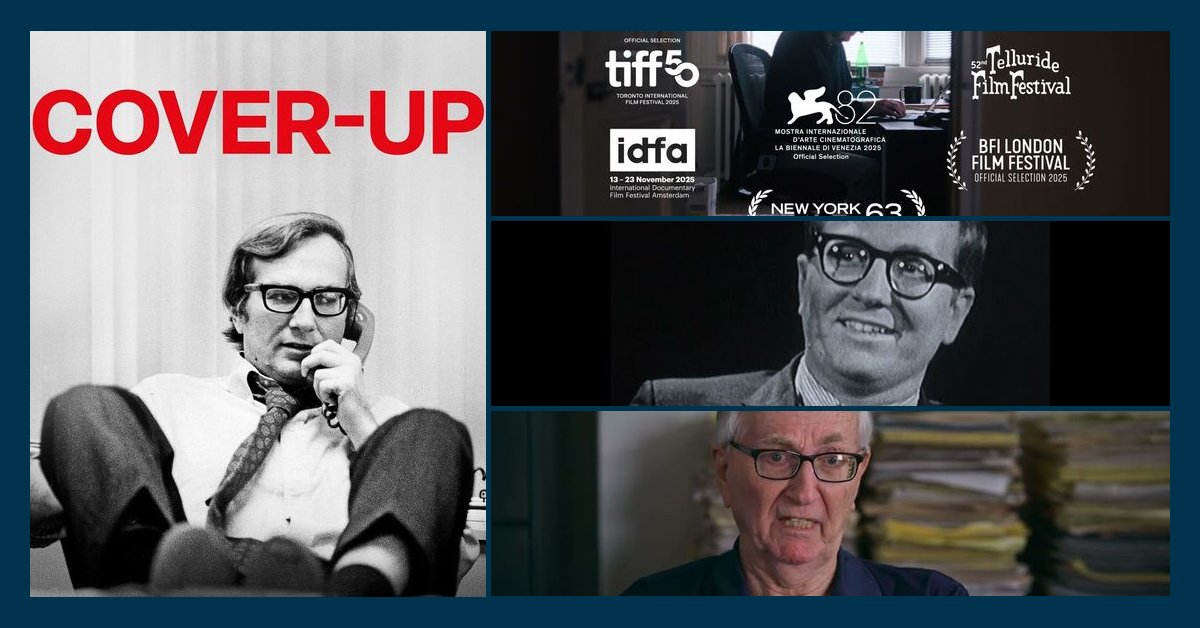

I just walked out of the theater and honestly, I feel like I need to sit down and process everything. My head is buzzing with names, dates, and the sheer weight of history that Seymour Hersh carried on his shoulders. I wasn't expecting to feel this heavy, but there's also a profound respect simmering underneath. The film left me thinking about the cost of truth-telling in a world that often prefers comfortable lies. I'm still turning over that final interview clip in my mind, where Hersh just looks so tired, yet so defiant. It's a complicated feeling.
🎬 Watch the Official Trailer
What's Cover-Up About?
Cover-Up is a documentary that digs deep into the life and career of investigative journalist Seymour Hersh. It's not a simple biography; it's a forensic examination of how he chased some of the biggest, darkest stories of the last half-century—from the My Lai massacre to the torture at Abu Ghraib. The film uses archival footage, interviews with Hersh himself, and conversations with contemporaries like Bob Woodward to map the terrain of investigative journalism and the forces that push back against it.
What Works in Cover-Up
- ✓ Laura Poitras's direction is masterfully tense. She builds scenes like a thriller, even when it's just Hersh sitting in a room talking. I was on the edge of my seat during the Abu Ghraib section.
- ✓ The access to Hersh is incredible. There's a raw, unfiltered quality to his interviews where you see the stubbornness and the weariness right on the surface. It felt deeply human.
- ✓ The archival editing is brilliant. They juxtapose official news reports with Hersh's scoops in a way that visually shows the 'cover-up' of the title. It's chilling.
- ✓ The inclusion of other journalists like Jeff Gerth and David Obst provides crucial context. It wasn't just a hero worship piece; it showed the ecosystem and the conflicts.
What Doesn't Work
- ✗ At 117 minutes, it does feel long in the middle. There's a segment about the CIA and Chile that, while important, made my mind wander for a bit.
- ✗ If you're not already somewhat familiar with 20th-century American political history, you might get lost in the parade of names and events. It assumes a baseline knowledge.
- ✗ I wish we'd gotten a tiny bit more from the subjects of his exposes, or the families affected, to balance the journalist-centric perspective.
Standout Moments & Performances
Two moments are burned into my brain. First, the grainy, silent footage they show while Hersh describes first learning about My Lai. The way Poitras holds on empty fields and quiet roads is devastating—you're forced to imagine the horror. Second, there's a scene where Bob Woodward is talking about Hersh, and his tone is this fascinating mix of professional respect and clear personal distance. You could feel the decades of journalistic rivalry in the room. It made the whole world of reporting feel intensely real and competitive.
Main Cast: Seymour Hersh, Jeff Gerth, David Obst, Bob Woodward, Max Friedman
Direction, Music & Visuals
Poitras, as expected, is a master of atmosphere. The cinematography is stark and observational, making even a cluttered office feel like a crime scene. The score is minimal—mostly just unsettling ambient drones that creep in during revelations, which I loved. It never tells you how to feel. The real 'performances' are from the interviewees. Hersh is the star, of course—gruff, unapologetic, and fascinatingly prickly. But seeing Max Friedman, the historian, connect the dots between different eras of government secrecy was equally compelling. The editing is the unsung hero, weaving decades of history into a coherent, urgent narrative.
Director: Laura Poitras
Genres: Documentary
Who Should Watch Cover-Up?
This is a must for journalism students, history buffs, and anyone who follows current events and wonders how the real story gets out. If you enjoyed All the President's Men or Poitras's previous work like Citizenfour, you'll be completely absorbed. It's also great for people who appreciate documentaries that feel like political thrillers, where the tension comes from paperwork and phone calls.
Who Might Want to Skip?
If you're looking for a light, entertaining night out or a straightforward, feel-good biopic, this isn't it. It's dense, demanding, and often bleak. Also, if you have a low tolerance for detailed discussions of government bureaucracy and military operations, you might find parts of it dry.
Final Verdict
I would absolutely recommend Cover-Up, but with the caveat that you need to be in the right headspace for it. It's a vital, sobering look at the machinery of truth and power. It made me angry, it made me think, and it left me with a deep appreciation for a specific kind of difficult, obsessive person. Would I watch it again? Probably not for fun, but I'd definitely revisit certain sections to better understand the historical threads. It's an important film, expertly made, even if it's not an easy watch.