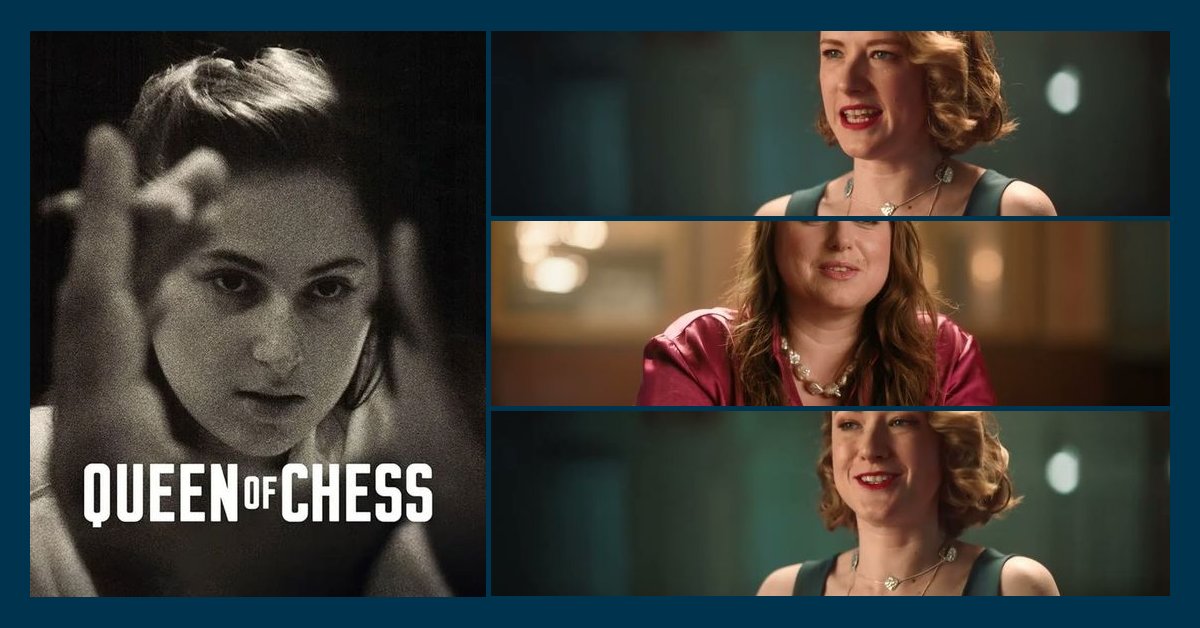

I just walked out of 'Queen of Chess' and honestly, I'm still buzzing. I went in expecting a standard sports documentary, but I left feeling genuinely inspired and a bit angry at the same time. My mind keeps circling back to Judit Polgar's quiet determination in the face of so much noise—from her father's intense methods to Kasparov's dismissive comments. It's one of those films that makes you want to go home and achieve something, you know? I'm still thinking about that final chess match sequence and what it must have cost her emotionally.
🎬 Watch the Official Trailer
What's Queen of Chess About?
The documentary follows Judit Polgar's incredible journey from a Hungarian girl trained by her controversial father to becoming the greatest female chess player ever. It chronicles her 15-year battle to break into the elite men's circuit, culminating in her legendary matches against world champion Garry Kasparov. It's less about chess moves and more about breaking barriers in one of the most stubbornly patriarchal sports.
What Works in Queen of Chess
- ✓ Judit Polgar's interview segments are magnetic. Her calm, matter-of-fact delivery about insane pressure makes her story more powerful.
- ✓ The archival footage of her childhood training with her sisters is fascinating and slightly unsettling in the best documentary way.
- ✓ The pacing is excellent for a 93-minute film—never drags, even when explaining chess strategies to non-players like me.
- ✓ Garry Kasparov comes across as a complex figure—respectful yet clearly struggling with being challenged by a woman.
What Doesn't Work
- ✗ I wish they'd explored her relationship with her sisters more deeply—it felt glossed over.
- ✗ The score occasionally gets too melodramatic during match sequences, telling me how to feel.
- ✗ Some chess terminology might lose absolute beginners, though they try hard to visualize it.
Standout Moments & Performances
There's a scene where teenage Judit, after a loss, simply stares at the chessboard while her father lectures in the background. The camera holds on her face, and you see this flicker of something—not defeat, but recalculation. It gave me chills. Another moment that stuck with me was Kasparov, in a contemporary interview, admitting his early dismissals were wrong. The look on his face was pure, unvarneted respect. And the home video of her as a small child, hands barely reaching over the board, contrasted with the fierce competitor she became—it was heartbreaking and uplifting.
Main Cast: Judit Polgar, Garry Kasparov
Direction, Music & Visuals
Rory Kennedy's direction is sharp and unfussy. She lets the story breathe without unnecessary flair. The cinematography cleverly uses the chessboard's geometry—close-ups on pieces being slammed down feel like declarations of war. The editing seamlessly weaves archival footage, home videos, and present-day interviews. The real standout is the sound design during the matches—the silence punctuated by clock ticks and piece movements builds incredible tension. Judit Polgar is a natural on camera, her performance being her own lived experience, which is impossible to fake.
Director: Rory Kennedy
Genres: Documentary
Who Should Watch Queen of Chess?
Absolutely anyone interested in stories of underdogs and quiet revolutionaries. You don't need to know a pawn from a knight to get invested. It's perfect for people who loved 'Queen's Gambit' but want the real, grittier story. Also, parents, coaches, or anyone in a mentoring role—it's a fascinating case study on pressure, expectation, and talent.
Who Might Want to Skip?
If you're looking for a light, feel-good sports triumph, this might be too nuanced and emotionally complex. Also, viewers who want pure chess strategy analysis might be disappointed—it's a human drama first.
Final Verdict
I would definitely recommend 'Queen of Chess.' It's a compelling, well-crafted documentary that does more than just recount facts—it makes you feel the weight of every move, both on and off the board. It's inspiring without being saccharine. Would I watch it again? Probably not tomorrow, but I can see myself revisiting it in a few years, or showing it to a friend who needs a boost. It's a solid 7.5—excellent at what it sets out to do, with a few minor flaws that keep it from being a masterpiece.