
I just walked out of the theater and honestly, I feel like I need to sit with a strong coffee and just process. The movie ends on this incredibly heavy, quiet note that just sits in your chest. It's not a film that gives you easy answers or a satisfying conclusion—it's more like being shown a slow-motion car crash through the eyes of the driver. I keep thinking about Paul Dano's face in that final scene, that mixture of exhaustion and haunted knowledge. It's left me feeling contemplative and a bit unsettled, which I think is exactly what Assayas wanted.
🎬 Watch the Official Trailer
What's The Wizard of the Kremlin About?
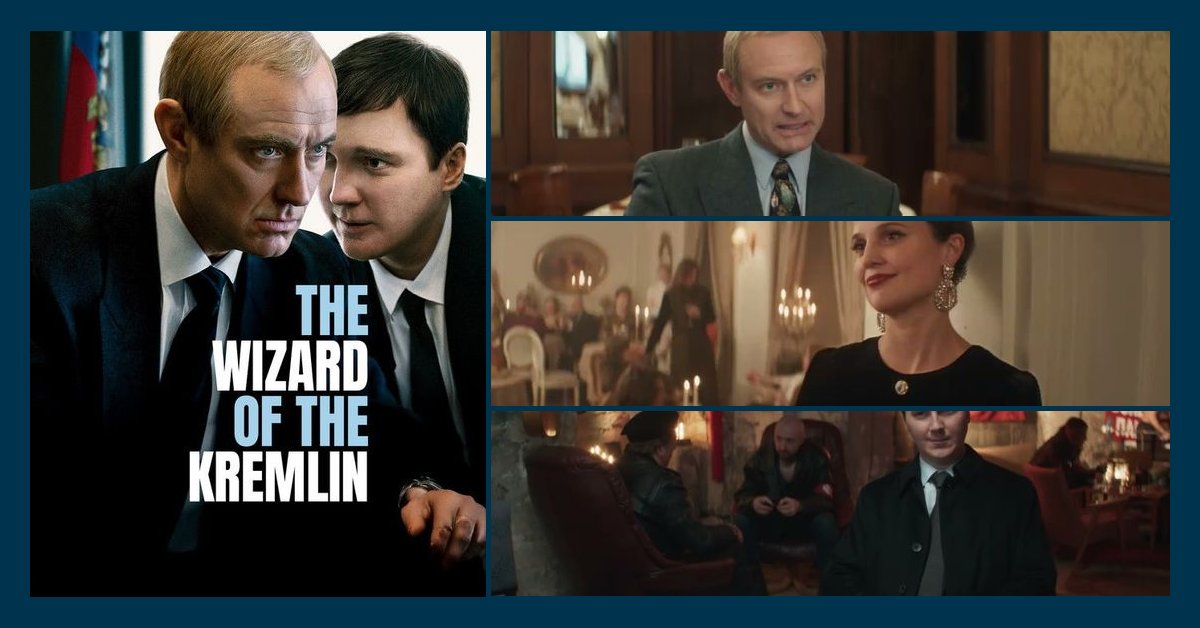
The Wizard of the Kremlin is a political drama that follows Vadim Baranov, a fictionalized spin doctor who rises from the chaotic 90s to become the architect of Putin's public image. It's less about grand historical events and more about the intimate, morally murky process of building a narrative for power. We see how truth gets shaped, bent, and weaponized from the inside, all through the eyes of a man who starts as an idealist and ends up... well, that's the question.
What Works in The Wizard of the Kremlin
- ✓ Paul Dano's performance is a masterclass in quiet intensity. He says so much with just his eyes, especially in the later, silent years.
- ✓ The production design is stunning. It perfectly captures the gaudy, desperate opulence of 90s Russia and the cold, sterile power of the Kremlin.
- ✓ The dialogue is sharp and philosophical without being pretentious. There's a great scene about 'manufacturing reality' that stuck with me.
- ✓ Jude Law is chillingly good as a charismatic, calculating Putin. He doesn't do a cheap impersonation; he captures the unsettling aura.
What Doesn't Work
- ✗ At 156 minutes, it drags in the middle. There's a 20-minute stretch about his TV career that felt like it could have been trimmed.
- ✗ Alicia Vikander's character, Ksenia, feels underdeveloped. She's supposed to be his moral compass, but her motivations are a bit fuzzy.
- ✗ The non-linear timeline can be confusing. It jumps between his youth, peak power, and self-imposed exile without clear transitions sometimes.
Standout Moments & Performances
Two scenes are burned into my brain. First, a early moment where Baranov, just a TV producer, explains to a young Putin how to use a simple, repeated lie to shape public perception. The casualness of it was terrifying. Second, a later scene where he's watching his own propaganda on TV in his empty mansion, and the camera just holds on his face as he realizes the monster he's helped create. I actually held my breath. There's also a tense, wordless sequence where he's purging old allies from the system—just files being stamped and phones going dead. It was brutally efficient.
Main Cast: Paul Dano, Jude Law, Alicia Vikander, Tom Sturridge, Will Keen
Direction, Music & Visuals
Assayas's direction is clinical and observant, which works perfectly for this subject. The cinematography is all cool blues and grays in the Kremlin, contrasting with the warmer, messier tones of 90s Moscow. The score is minimal—mostly ambient dread—which makes the silence in the rooms of power feel even heavier. Performance-wise, Dano carries the film, but Will Keen has a fantastic, slimy cameo as a oligarch. Tom Sturridge is also great as a cynical journalist who serves as the audience's conscience. Everyone feels authentically part of this world.
Director: Olivier Assayas
Genres: Drama
Who Should Watch The Wizard of the Kremlin?
This is for viewers who love slow-burn, talky political dramas like 'The Death of Stalin' (but less comedic) or 'The Last King of Scotland'. If you're fascinated by the mechanics of power, propaganda, and moral compromise, you'll be glued to the screen. It demands your attention and rewards you with complex ideas, not action.
Who Might Want to Skip?
If you're looking for a fast-paced thriller or a definitive historical biopic, skip it. This is a cerebral, character-driven film that's light on plot and heavy on atmosphere and ethical debate. It's a demanding watch.
Final Verdict
I would recommend it, but with caveats. It's an intelligent, chilling, and impeccably acted film that offers a fascinating (if fictionalized) peek behind the curtain of modern authoritarianism. It won't be for everyone—it's long and deliberately paced—but it's a movie that will make you think and discuss long after the credits roll. Would I watch it again? Probably not soon; it's a bit of an emotional workout. But I'm glad I saw it. It feels important.